- People struggle to see why they should choose you.
- Prospective customers or supporters compare you with alternatives, but the difference your offer or contribution makes is not clear to them. Interest is not translating into purchases, participation or support.
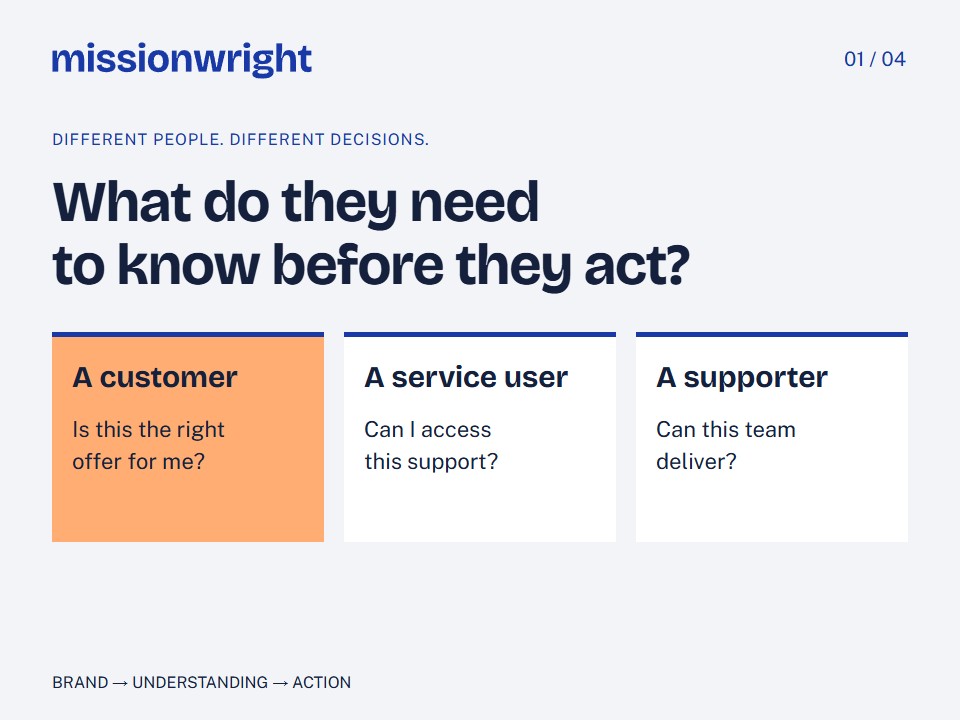
- Your message works for one audience but misses another.
- Service users cannot find the information they need, funders have unanswered questions, or customers struggle to judge whether your offer fits. Your communications are not addressing the decisions each audience needs to make.
- Reaching people takes more effort, with less response.
- In the attention economy, platforms compete to capture and monetize people’s attention. Your work competes within feeds shaped by platform priorities, alongside news, entertainment and advertising. You may be producing more content while reaching fewer of the people your mission depends on.
- Your plans exceed your team’s time, skills or budget.
- Staff time, expertise and budgets shape what can be delivered. In nonprofits, pressure to minimize overhead can also restrict investment in the capabilities needed to advance the mission.
- New tools are not closing the gaps in your work.
- Technology, including AI, can expand what a team can do. Unequal access, skills and capacity to evaluate the work can also widen the distance between organizations.
- You need to demonstrate impact without exposing people.
- Demonstrating a contribution must not compromise the people behind it. Organizations serving vulnerable communities need ways to communicate their work while protecting privacy and dignity.
- You collaborate with organizations seeking the same support.
- Nonprofits can collaborate on a shared cause while seeking the same funding and volunteers. Joint work needs to preserve each organization’s distinct contribution, not make the partners indistinguishable.
- You can report activity, but not its contribution to your mission.
- Leaders and teams may mean different things by success. Without shared objectives and meaningful evaluation, more content or engagement can conceal whether understanding, trust or participation has changed.